As an Amazon A ssociate, I earn from Qualifying purchases.
There is nothing quite as frustrating as walking into a freshly cleaned bathroom only to see a crusty, white layer coating your fixtures. That chalky residue makes even the most expensive sink look grimy and neglected. If you have noticed this issue in your home, you aren’t alone. It is a common problem caused by hard water, which is rich in dissolved minerals like calcium and magnesium.
While this mineral buildup can be stubborn, it doesn’t mean your fixtures are ruined. You don’t need harsh chemicals or expensive tools to restore their shine. In fact, you can safely remove calcium buildup with simple household items you likely already have in your pantry. This guide covers why these deposits form, the most effective ways to remove them, and how to prevent them from recurring.
Contents
- 1 Why Calcium Buildup Forms on Faucets
- 2 How to Remove Calcium Buildup on a Faucet | Step-by-Step Guide
- 3 Best Cleaners for Removing Calcium Buildup on Faucets
- 4 What to avoid
- 5 How to Treat Different Levels of Calcium Buildup
- 6 How to Prevent Calcium Buildup from Returning
- 7 Conclusion
- 8 Frequently Asked Question
Why Calcium Buildup Forms on Faucets
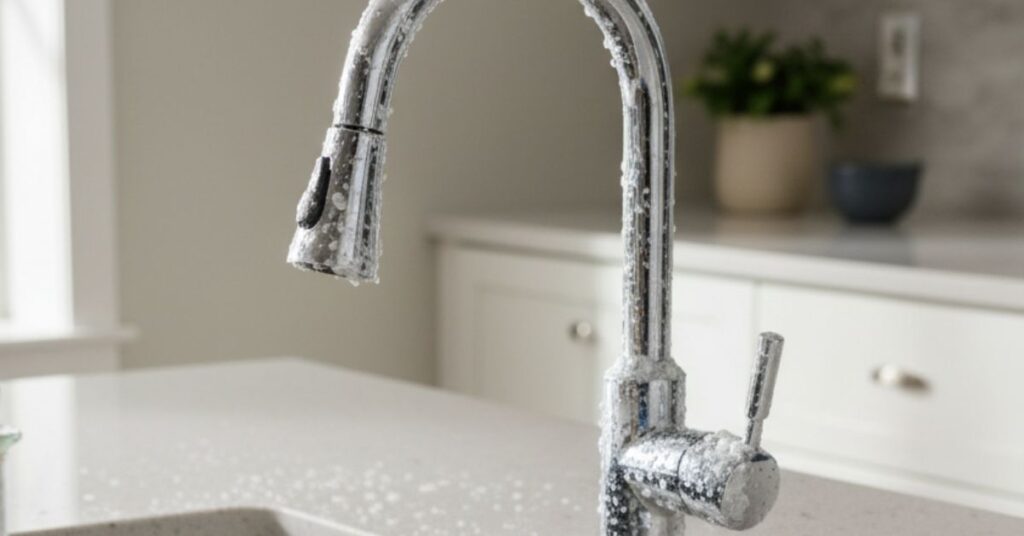
When water evaporates, it leaves behind any dissolved minerals. If you live in an area with hard water, that means high concentrations of calcium and magnesium are left on the surface once the moisture is gone. Over time, these layers accumulate, creating that hard, white crust—also called limescale.
Several factors contribute to this unsightly problem. Frequent splashing around the sink area without wiping it dry allows water to sit and evaporate repeatedly. This often happens in specific trouble spots:
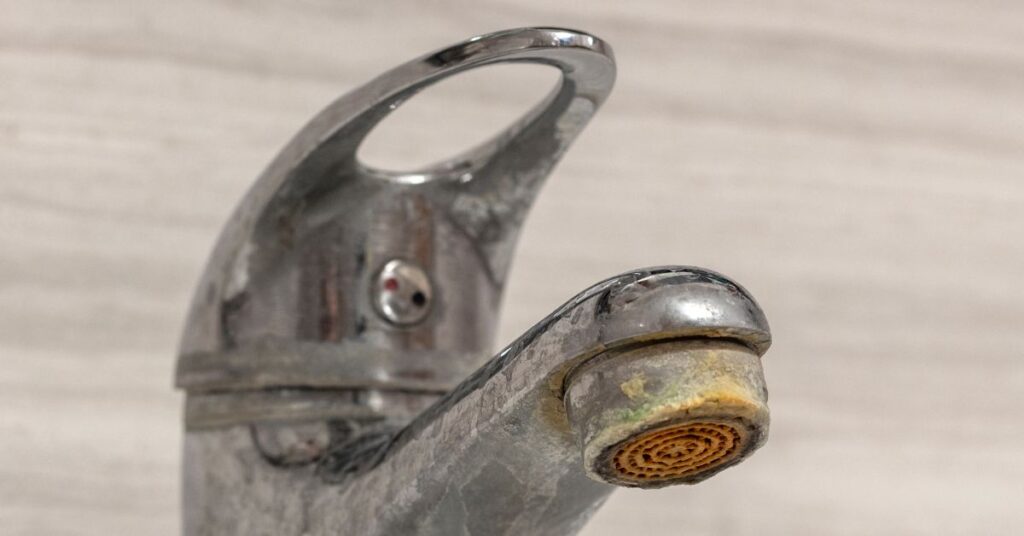
- The spout: The tip of the faucet often retains a drop of water after use, which can lead to crusty blockages.
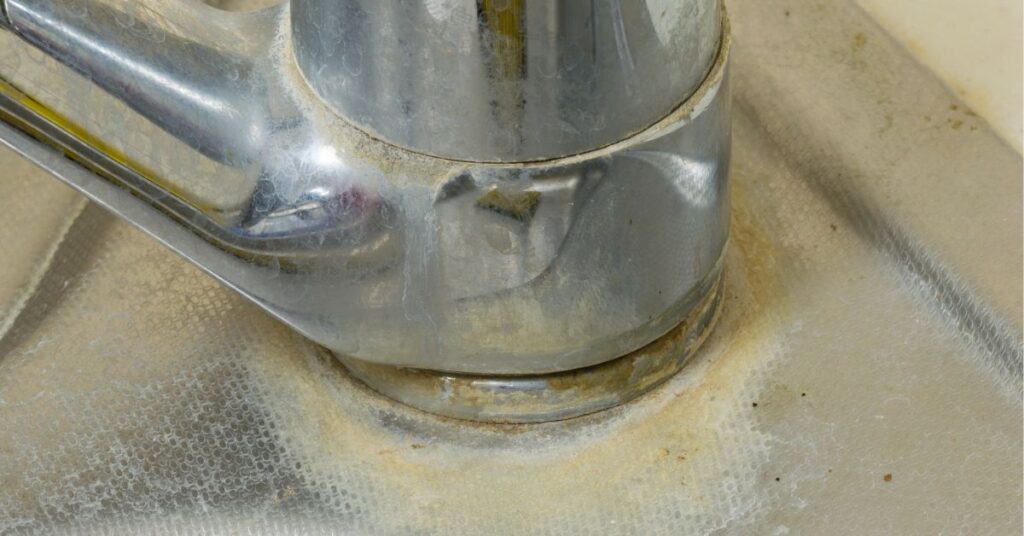
- The base: Water pools here easily, eating away at the finish if left untreated.
- Handles and joints: Wet hands transfer water to these areas, where it dries and hardens.
- The aerator: This small screen inside the spout can become completely clogged, restricting water flow.
Identifying these deposits early is crucial. If left too long, the buildup can restrict water pressure, damage the finish, or even require you to replace parts of the plumbing fixture.
How to Remove Calcium Buildup on a Faucet | Step-by-Step Guide
Restoring your fixture doesn’t have to be a headache. Follow this simple process to dissolve the minerals and reveal the shine underneath.
Step 1: Gather your supplies
Before you start, grab the following items:
- White vinegar or lemon juice (the acid cuts through the minerals).
- Baking soda (for scrubbing power).
- A microfiber cloth or rag.
- A soft toothbrush.
- A small plastic bag.
- A rubber band.
Step 2: Prepare the solution
For the spout, pour vinegar into the plastic bag until it is about halfway full. If you are cleaning the handles or the base, soak a cloth or paper towel in the vinegar until it is fully saturated.
Step 3: Apply the cleaning agent
To clean the spout, submerge the faucet tip into the vinegar-filled bag. Secure it in place by wrapping the rubber band tightly around the bag and the faucet neck. For the rest of the fixture, wrap the vinegar-soaked towel around the affected areas, ensuring the wet cloth touches the mineral deposits directly.
Step 4: Let it sit
Patience is key here. Let it sit for at least 20 to 30 minutes. If you are dealing with heavy calcium buildup, you might need to leave it for an hour or even overnight to let the acid fully break down the hardened crust.
Step 5: Scrub away the residue
Remove the bag and towel. Take your old toothbrush or a soft sponge and gently scrub away the loosened debris. For tough spots, dip the brush in a bit of baking soda paste for extra abrasion.
Step 6: Rinse and dry
Rinse the area thoroughly with warm water to remove any remaining cleaner or grit. Finally, wipe the surface completely dry with a clean microfiber cloth to prevent new water spots from forming immediately.
Best Cleaners for Removing Calcium Buildup on Faucets
You have several options when choosing a cleaner, ranging from natural pantry staples to stronger commercial products.
Natural cleaning solutions
- White vinegar: The high acidity makes this the best way to tackle limescale naturally.
- Lemon juice: Contains citric acid, which works similarly to vinegar and smells better.
- Baking soda paste: When mixed with a little water, this acts as a gentle abrasive that won’t scratch most finishes.
- Vinegar and baking soda: Combining these creates a fizzing reaction that can help dislodge deposits in tight crevices.
Commercial cleaners
If natural methods aren’t working, look for a dedicated calcium and lime remover. Ensure the product is safe for your specific finish (chrome, brushed nickel, or oil-rubbed bronze). Check the label to see if it works on “calcium buildup on a faucet” specifically.
What to avoid
Never use steel wool or harsh scouring pads, as these will etch the metal and ruin the finish. Avoid bleach or cleaners that release toxic fumes. Additionally, be careful with prolonged acid exposure on delicate finishes like antique brass or matte black fixtures; always check manufacturer instructions for brands like Kohler or Moen before soaking them for long periods.
How to Treat Different Levels of Calcium Buildup
Not all stains require the same level of effort. Here is how to adjust your method based on the severity of the problem.
Light calcium deposits
If you just see faint white spots, a quick wipe with a vinegar-dampened cloth is usually enough. You can also use a little soap and water, then thoroughly dry.
Moderate buildup
When the crust is visible and feels rough to the touch, use the vinegar soak method described above. Wrapping a wet rag around the base or handles for 30 minutes should soften the minerals enough to scrub them off.
Heavy or hardened calcium
If the aerator is blocked or there are thick layers of scale, you need a longer soak. Leave the vinegar bag on overnight. You may also need to unscrew the aerator and soak it in a bowl of vinegar separately to dissolve the blockage completely.
How to Prevent Calcium Buildup from Returning
Once you have successfully removed the deposits, you will want to keep them away. Prevention is easier than scrubbing.
- Dry the faucet: After washing your hands or doing dishes, quickly wipe down the sink and fixture. Removing the water before it evaporates prevents minerals from settling.
- Weekly cleaning: Clean calcium buildup weekly with a diluted vinegar spray to catch it before it hardens.
- Install a water softener: If hard water build-up is a constant battle in your shower, appliances, and pipes, a whole-home water softener can remove the minerals at the source.
- Clean the aerator: Regular maintenance helps ensure consistent water flow and prevents internal clogs.
- Use a faucet filter: If a full softener system isn’t in the budget, a simple filter attached to the tap can reduce mineral content.
Conclusion
Hard water is a nuisance, but it doesn’t have to ruin the aesthetics of your bathroom or kitchen. Understanding that calcium comes from evaporating water helps you target the problem effectively. Whether you choose to remove calcium buildup with a simple vinegar soak or a commercial descaler, the key is to give the solution time to work.
Remember, the best defense is a good offense. Keeping the area dry and performing light weekly maintenance will prevent stubborn mineral deposits from taking over. With these tips, you can keep your plumbing fixtures sparkling and clog-free for years to come.
Frequently Asked Question
What causes calcium buildup on faucets?
Calcium buildup, or limescale, is caused by hard water containing high levels of dissolved minerals, such as calcium and magnesium. When the water evaporates on your fixture, it leaves these minerals behind, which accumulate over time into a hard, white crust.
Does vinegar remove calcium deposits from faucets?
Yes, vinegar is highly effective. The acetic acid in vinegar reacts with the calcium carbonate in the deposits, breaking them down so they can be wiped away. It is safe for most finishes and is an eco-friendly cleaning option.
Is calcium buildup the same as limescale?
Yes, the terms are often used interchangeably. “Limescale” generally refers to the white, chalky deposit consisting mainly of calcium carbonate that forms on surfaces frequently in contact with hot water, such as kettles, boilers, and hot water pipes.
How often should I clean calcium buildup from my faucet?
To prevent heavy accumulation, you should wipe down the area around your faucet daily to keep it dry. For actual removal, a weekly light cleaning with vinegar is recommended. Deep cleaning via soaking can be done monthly or whenever you notice a water flow restriction.
How can I permanently prevent calcium buildup?
The only way to permanently prevent calcium and other minerals from reaching your fixtures is to install a whole-house water softener. This system removes the minerals from the water supply before they enter your home’s plumbing. Without a softener, you must rely on regular cleaning and drying to manage the buildup.
As an Amazon A ssociate, I earn from Qualifying purchases.