As an Amazon A ssociate, I earn from Qualifying purchases.
There are few things more jarring than stepping into your bathroom for a relaxing wash, only to be hit by a foul odor. Instead of the scent of fresh soap, your shower drain smells like sewer gases. It is an unpleasant experience that can make your bathroom feel dirty, even after you scrub the tiles.
When a nasty smell is coming from the shower drain, it is easy to panic. You might assume your entire plumbing system has failed. However, the odor often indicates a specific, localized issue rather than a catastrophe. It isn’t just dirt; it is usually a mechanical failure or a buildup issue within the pipe.
Fortunately, you can fix the most common causes of a stinky shower drain without major construction. Whether it is a dry p-trap or a stubborn clog, you can likely solve the problem yourself. In this guide, we will explore why your shower drain smells bad, how to fix it, and how to prevent it.
Contents
- 1 Why does the shower drain smell like a sewer?
- 2 Common causes of sewer smell from shower drains
- 3 How to fix a shower drain that smells like sewer
- 4 Why does the smell get worse after showering
- 5 How to prevent sewer smells from shower drains
- 6 When to call a plumber
- 7 Keep your shower fresh.
- 8 Frequently Asked Questions
Why does the shower drain smell like a sewer?
To understand why your shower drain smells like sewage, you first need to know how your plumbing system works. Your home connects to a sewer line, but you should not be able to smell it. The plumbing system relies on traps and vents to prevent sewer gases from entering the home. When these components function properly, water flows down the drain while gases remain sealed out. However, if a part of the system fails—such as a blockage or a dried-out trap—the protective barrier breaks down, allowing sewer gases to travel back up into your bathroom. Identifying the source of the odor early is crucial for preventing more serious drain problems later.
Common causes of sewer smell from shower drains
If you detect a musty smell or a scent like rotten eggs or sewage, one of the following culprits is likely to blame.
A dry P-trap
The most common cause of a sewer smell is a dry P-trap. Under the sink, you’ll find a U-shaped pipe called the P-trap, and your shower has one as well. The P-trap holds a small amount of water that forms a seal to block sewer gases. If you haven’t used the shower for a while, the water in the trap can evaporate. Once the water disappears, sewer gases can rise freely through the drain.
Clogged or dirty drain
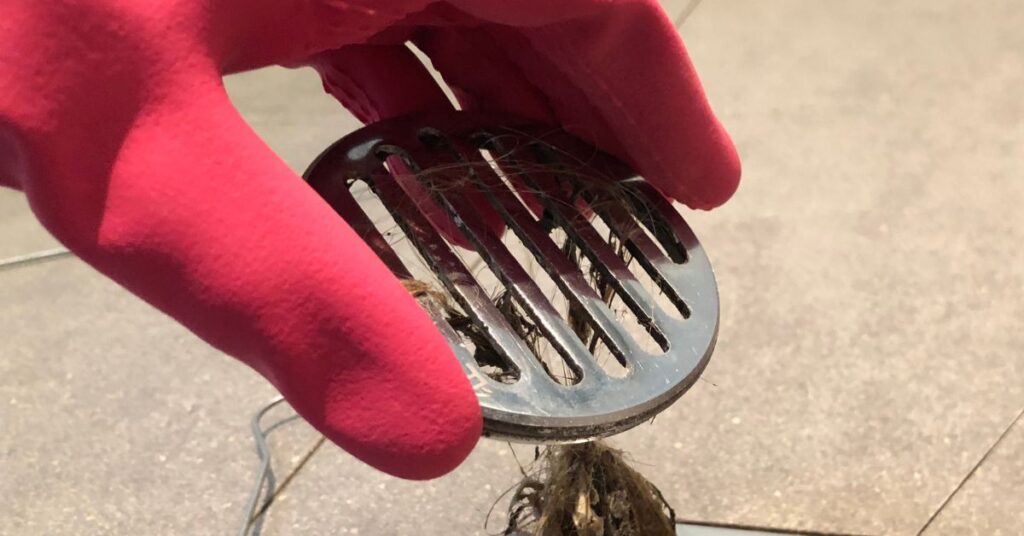
Hair, soap scum, and body oils naturally build up inside your drain. Over time, these materials form a dense, sticky residue that creates an ideal breeding ground for bacteria. As the bacteria break down the debris, they release foul-smelling gases. If your shower drain smells like rotten eggs, the odor often comes from this decaying buildup rather than the main sewer line.
Biofilm buildup
Even without a complete clog, your drain may develop biofilm—a slimy layer of bacteria and organic waste that clings to the inside of the pipes. Biofilm in the shower is particularly stubborn and can produce a strong, sewage-like odor. Simply cleaning the shower tiles won’t remove the smell; you need to clean the drain itself to eliminate the source.
Blocked vent pipe
Your plumbing system needs to breathe. Vent pipes on your roof allow air to enter, ensuring water flows smoothly. If a bird’s nest or leaves block this vent, it creates a vacuum. When water goes down the drain, the suction might pull the water out of the p-trap, breaking the seal and allowing sewer gases to escape.
Leaking drain or broken seal
In rare cases, the issue is structural. A leaking drain or a crack in the drain line can allow gas or even wastewater to escape into the space under the shower base. If the smell persists despite all cleaning efforts, you may have a damaged pipe.
How to fix a shower drain that smells like sewer
Ready to get rid of shower drain smells? Follow these step-by-step methods to clean the drain and restore fresh air to your bathroom.
Step 1: Run the water
If a rarely used shower smells, run the water for 1–2 minutes. This refills the dry P-trap, restoring the barrier that prevents sewer gases from entering the home.
Step 2: Clean the drain cover
Remove the drain cover. This area often traps hair and soap scum. Clean the cover thoroughly and use a wire or a small tool to pull out any visible gunk hanging near the surface.
Step 3: Use boiling water
Boiling water offers a simple, chemical-free way to dissolve soap scum and loosen minor buildup. Carefully pour a pot of boiling water down the drain to help flush away the source of the odor.
Step 4: Baking soda and vinegar
You can make your own drain cleaner using pantry staples.
- Pour half a cup of baking soda down the drain.
- Follow it with half a cup of white vinegar.
- Cover the drain with a stopper or a wet rag to keep the reaction inside.
- Let it fizz for 15 to 20 minutes.
- Flush with hot water.
- This mixture helps break down biofilm and neutralizes odors.
Step 5: Snake the drain
If a shower drain smells like rotten eggs because of a deep blockage, use a drain snake. Insert the snake into the pipe to hook and remove stubborn hair clogs. This method is safer and more effective than chemical drain cleaners, which can damage your pipes.
Why does the smell get worse after showering
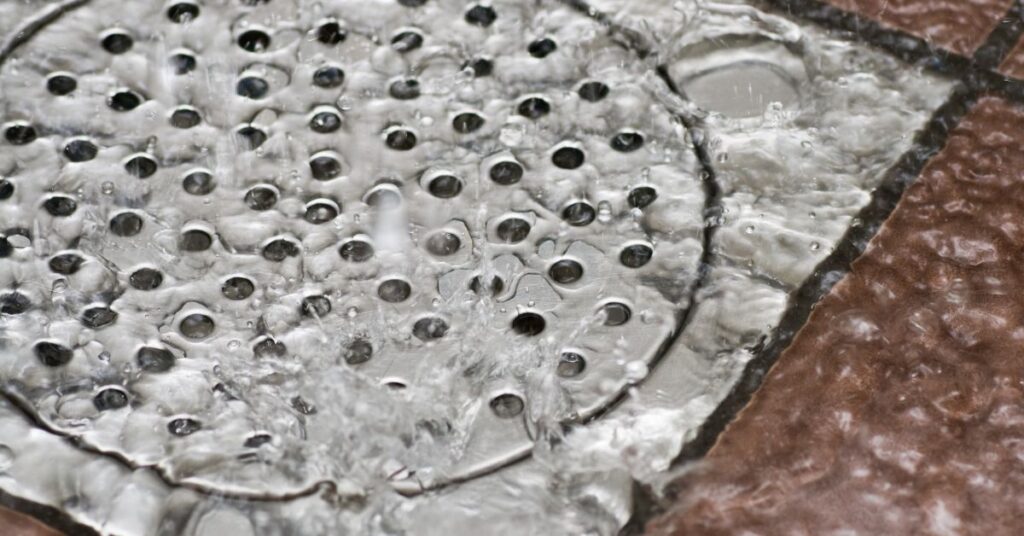
It seems counterintuitive, but many homeowners notice the smell coming from the shower is stronger after they use it. Why does the shower drain smell like the sewer when water is running?
There are a few reasons for this. First, warm water heats the bacteria and biofilm inside your drain. Heat amplifies the odor, making the stink more potent. Second, as water flows down, it displaces the air in the pipe. If there is a partial clog or a venting issue, that air—carrying the sewer smell—is pushed back up into the room.
How to prevent sewer smells from shower drains
Once you have gotten rid of the smell, you want to keep it from coming back. Consistent drain maintenance is key.
- Install a hair catcher: Prevent debris from entering the drain to stop clogs that harbor bacteria.
- Flush weekly: Even if you don’t use the shower often, run water down the drain once a week to keep the p-trap full.
- Use enzyme cleaners: Once a month, use a biological enzyme cleaner. Unlike harsh chemical drain cleaners, these use bacteria to safely eat away organic matter and biofilm in your shower drain.
- Address slow drains immediately: If the water drains slowly, don’t wait. Use a drain snake or boiling water to clear the path before odors develop.
When to call a plumber
While you can handle most smelly drain issues, some require a professional. You should invest in a drain expert if:
- The sewage smell persists after thorough cleaning and flushing.
- You hear gurgling sounds coming from the drain when you flush the toilet or run the sink.
- You smell sewer gas in multiple rooms.
- There are signs of water damage around the drain or on the ceiling below the shower.
These signs indicate a blockage in the main sewer line or a broken vent, both of which require professional drain cleaning or repair.
Keep your shower fresh.
A shower drain smelling like a sewer is a common annoyance, but it doesn’t have to be permanent. Whether it is a dry p-trap needing water or biofilm needing a scrub, the solution is usually within reach. By understanding the causes and following a regular cleaning routine, you can prevent these odors and protect your plumbing system. Don’t let a smelly shower drain ruin your morning routine—take action today.
Frequently Asked Questions
Why does my shower drain smell like sewer, but only sometimes?
If the smell comes and goes, it might be due to changes in air pressure affecting a blocked vent pipe, or it could be a dry p-trap in a guest bathroom that only smells when the water evaporates completely. Weather changes can also affect how sewer gas moves.
Can a dry P-trap cause a sewer gas smell?
Yes, a dry p-trap is a prevalent cause. The water in the trap acts as a barrier. When it dries out, it allows sewer gases to escape directly into your bathroom.
How do I get rid of the sewer smell in my shower drain naturally?
To remove the smell naturally, pour baking soda down the drain, followed by vinegar. Let it sit, then flush with boiling water. This breaks down the biofilm without harsh chemicals.
Is a sewer smell from the shower dangerous?
It can be. Sewer gas contains methane and hydrogen sulfide. While low levels mainly smell bad, high concentrations can be toxic or flammable. It is best to address the smell coming from the shower.
Why does my bathroom smell like sewage even after cleaning?
If you have scrubbed the shower tiles but the room still stinks, the issue is likely inside the drain. The odor is coming from biofilm or a dry trap that surface cleaning cannot reach. You need to treat the inside of the drain.
As an Amazon A ssociate, I earn from Qualifying purchases.